Subtle Influence

Nicholas Urbaniak • November 28, 2024

Even the Smallest Intentions Make Waves

In a world that often celebrates grand gestures, high achievement, and visible impact, it’s easy to overlook the profound significance of small, subtle actions. Yet, in embracing the power of being present, refraining from immediate action, and holding space for others, we can often create lasting and meaningful effects that ripple beyond what’s visible. This quiet impact—a way of influencing without force or imposition—can be transformative both in our lives and in the lives of others.


The Ripple Effect of Small Actions

The beauty of small actions is in their simplicity. A gentle smile, a listening ear, or a moment of kindness may seem insignificant, but these acts create ripples that extend beyond the moment. These are the small but deliberate gestures that can leave a positive mark on someone’s day or shift their perspective. The effects of these actions often multiply in ways we cannot measure, as others, in turn, pass on the kindness they have experienced.


For instance, holding space for someone to express themselves without judgment can uplift and reassure them in ways that direct advice or solutions cannot. These small gestures are not passive; they are purposeful acts of connection. This type of impact resonates not because it seeks to “fix” or impose but because it provides an invitation for others to discover their own insights and solutions. In this way, the power of small actions rests in their ability to grow and influence in subtle, often unseen ways.


Choosing Mindful Presence Over Immediate Action

Being present in a world that constantly demands action is itself a form of quiet rebellion. When we choose to pause and simply be with ourselves or with others, we are embracing an approach that values depth over immediacy. Presence does not seek to change the moment; it seeks to experience it fully. In this state, we cultivate a stillness that not only benefits us but can deeply affect those around us.


Mindful presence is about recognizing that sometimes the greatest impact we can have is through restraint. By choosing not to act impulsively, we create a reflective space where true understanding and intentional action can emerge. In this way, the power of presence is often in what it does not do. It does not rush to fill silence; it does not impose answers. Instead, it offers a calm and open atmosphere that allows thoughts, feelings, and intentions to unfold naturally. This creates a meaningful space where growth and self-awareness can flourish.


Avoiding Unintended Consequences Through Thoughtful Restraint

Often, in our eagerness to help or influence, we can unintentionally cause harm by acting too quickly. In these moments, a zero-impact approach—choosing to wait or refrain from intervening—can prevent outcomes we might not anticipate. Thoughtful restraint encourages us to consider the broader picture, allowing us to act only when we are fully aware of the potential effects.


For example, in personal relationships, rushing to solve another person’s problem can unintentionally rob them of the opportunity to find their own answers. By refraining from offering immediate solutions, we give others the space to explore, grow, and arrive at their own insights. This non-intrusive approach respects their autonomy and often leads to deeper, more authentic outcomes. This perspective extends beyond relationships; in any area where our actions impact others, a thoughtful, low-impact approach can prevent disruption and encourage self-reliance.


Leaving Space for Others to Shine

One of the most profound ways we can influence others is by intentionally stepping back and creating room for them to flourish. In a world where assertiveness and visibility are often prized, there is quiet wisdom in allowing others the space to grow and express themselves freely. When we create this space, we affirm others’ capabilities, encouraging them to trust their own paths.


In leadership, for instance, this means resisting the urge to control every detail and instead fostering an environment where team members feel empowered to take initiative. When we lead by creating space, we’re not diminishing our influence; rather, we’re amplifying the potential impact others can have. This approach strengthens relationships, fosters mutual respect, and allows others to step confidently into their own strengths.


The Profound Value of Small or Zero Impact

In celebrating small or zero impact, we are embracing an approach that values subtlety, mindfulness, and respect for the natural unfolding of events. This philosophy does not seek validation through visibility or immediacy. Instead, it recognizes that our greatest impact often comes not from what we do, but from the presence and patience we offer to those around us.


By understanding the quiet strength in small actions, mindful presence, thoughtful restraint, and creating space for others, we shift the focus away from proving our worth through grand gestures. Instead, we honor the significance of subtle influence and the lasting value of meaningful connection. In a world that often equates impact with scale, choosing to create small ripples can be a powerful reminder that true influence is often felt most deeply in the quiet spaces we leave for growth, reflection, and authenticity.


So, the next time you find yourself wondering if you’re doing enough or if your efforts are visible enough, remember the power of quiet impact. Whether through a kind word, a pause to listen, or a respectful step back, the impact of small, intentional actions can be as powerful as any grand gesture—perhaps even more so, for it allows us to connect in ways that honor others’ journeys as much as our own.

Share

By Nicholas Urbaniak • October 4, 2026
There’s a strange thing that happens when you want more out of life. You start convincing yourself that where you are now isn’t enough. The job isn’t enough. The house isn’t enough. The money isn’t enough. You’re not far enough along. You haven’t accomplished enough yet. And maybe some of that is true. Maybe there really is another level for you. Maybe you should make more money. Maybe you should take the risk, build the thing, get healthier, move somewhere new, become better at what you do. There is absolutely nothing wrong with wanting more. I think wanting more is part of being alive. But I’ve started to realize that there’s a big difference between wanting more and needing more in order to finally be okay . That difference changes everything. Because if your happiness is always attached to whatever comes next, you never actually arrive. You just move the finish line. You tell yourself: Once I make this much money, I’ll relax. Then you make it. And there’s another number. Once I get this job, I’ll feel successful. Then you get it. And suddenly you’re comparing yourself to the person above you. Once the business works… Once we buy the house… Once I lose the weight… Once people recognize what I’m doing… There’s always another “once.” And without realizing it, you can spend years living five feet in front of yourself. Maybe the Goal Isn’t to Stop Wanting More I don’t think the answer is to kill your ambition. I don’t want to pretend I’ve reached some enlightened state where I no longer care about accomplishing anything. I do. I want to build things. I want to succeed. I want my family to have more opportunities. I want to become better. I want to see what I’m capable of. But I don’t think those things have to come from being unhappy with my life right now. That’s the part I think we get wrong. We’ve been taught that dissatisfaction creates progress. Sometimes it does. But dissatisfaction can also become an addiction. Eventually, you stop climbing because you’re excited about where you could go. You climb because standing still makes you feel like you’re failing. Those are two very different ways to live. One says: “This isn’t good enough.” The other says: “This is good. And I wonder what else is possible.” I’d rather build from the second one. Comfort Isn’t Complacency Being comfortable where you’re at doesn’t mean giving up. It doesn’t mean you stop working hard. It doesn’t mean accepting circumstances you have the ability to change. It just means you stop treating your current life like a waiting room. You actually live in it. You look around and recognize that some of the things surrounding you right now were once things you desperately wanted. That’s easy to forget. There are probably things in your life today that a younger version of you would be amazed by. Things you prayed for. Things you worked for. Things you once thought would make everything different. And then they became normal. That’s what humans do. We adapt. The extraordinary becomes ordinary surprisingly fast. Which means if we don’t learn how to appreciate what we have now, there’s no reason to believe we’ll suddenly become good at appreciating things when we have more. More money won’t fix that. More recognition won’t fix that. More success won’t fix that. We’ll just have more things to overlook. Wanting From Abundance Instead of Lack I think there are two different places ambition can come from. One is lack. I need more because what I have proves I’m not enough. The other is abundance. I’m grateful for what I have, and I’m curious about what I can create from here. The actions might look exactly the same from the outside. Both people might work late. Both might start businesses. Both might chase promotions. Both might set ridiculous goals. But internally, they’re living completely different lives. One is constantly running away from something. The other is moving toward something. And I think you can feel the difference. When everything is driven by lack, even winning feels temporary. You get what you wanted and immediately ask: What’s next? When you’re grounded first, success becomes something you get to experience rather than something you need to survive. You can actually enjoy it. You Don’t Have to Earn the Right to Enjoy Today This might be the hardest part. Sometimes we almost feel guilty being content. Like if we become too comfortable, we’ll lose our edge. If I stop being hard on myself, maybe I’ll stop progressing. If I appreciate where I am, maybe I’ll stay here forever. But I’m not sure peace makes us weaker. I think it might make us better. Because now the energy that used to go toward constantly proving yourself can go toward actually creating something. You’re not wasting half of your attention worrying about whether you’re behind. You can just work. You can be present with people. You can take risks because your entire identity isn’t riding on whether they succeed. You can fail without feeling like the failure says something permanent about you. And strangely enough, that might make growth easier. You stop gripping everything so tightly. The Life You’re Chasing Is Happening Right Now That sentence has been sitting with me. Because the future version of your life that you’re working so hard for will eventually become another ordinary Tuesday. You’ll wake up. Make coffee. Look at your phone. Think about what needs to get done. Whatever you achieve, eventually you’re still just going to be you, living another day. So maybe the skill isn’t figuring out how to create a life so incredible that every day feels extraordinary. Maybe the skill is learning to see what is already extraordinary inside an ordinary day. The people sitting next to you. Your health. A quiet morning. A conversation with someone you love. Having something worth working toward. Even having the ability to wonder what comes next. None of that means you shouldn't chase more. Chase it. Build it. Go see how far you can take things. Just don’t accidentally sacrifice your entire present to a future that keeps moving away from you. There’s a sentence I keep coming back to: I’m happy here. And I’d still like to see where I can go next. I think both things can be true. Maybe they’re supposed to be. Where Purpose Blossoms, Honey Follows A bee doesn’t sit on a flower angry that it hasn’t reached the next one yet. It takes what is there. It gathers the nectar. And then it moves. Flower to flower. Moment to moment. There’s movement, but there’s also presence. Maybe we could learn something from that. You don’t have to hate this chapter to be excited about the next one. You don’t have to convince yourself that your life is lacking in order to improve it. You can appreciate what’s growing now while still planting what comes next. You can be grateful and ambitious. Content and curious. Comfortable and still moving. Maybe getting more doesn’t begin with desperately reaching for something outside of you. Maybe it starts by finally realizing: What I have right now is enough for me to be okay. And from there?  Let’s see what else can grow.
Dappled sunlight on mossy forest floor
By Nicholas Urbaniak • January 3, 2026
Feeling anxious, restless, or stuck? This piece explores how listening to emotions can gently guide your next step.
The man you stayed for himself
By Nicholas Urbaniak • June 14, 2025
There are days when nothing makes sense. You try. You show up. You give your heart, your time, your attention. And still — nothing sticks. Nothing moves. Nothing reflects back what you hoped. Instead of momentum, you get static. Instead of appreciation, silence. You pour into things, into people, into ideas… and somehow feel more empty than full. And slowly, something inside you starts to break. It’s not dramatic. It’s quiet. A quiet cracking of belief. Belief that the world will reward your effort. Belief that kindness comes back around. Belief that if you keep doing the right thing, something will click. But sometimes, it doesn’t. And you’re left there — not with a revelation, but with a weight. A tiredness that no nap or quote or breathwork can fix. And here’s the truth: You’ve been giving everything away hoping someone would give something back. But now, there’s nothing left to give. And no one’s giving back. So maybe it’s time to stop. Not forever. Not dramatically. Just… for you. Stop waiting. Stop bleeding for things that don’t hold you in return. Stop trying to earn peace from a world that profits off your unrest. This isn’t giving up. This is self-rescue. You don’t need to be more useful, more available, more inspiring. You just need to be yours again. And that starts with something simple, but life-altering: “I see you. I won’t leave you again.” Because maybe the person you’ve been waiting to show up for you — was always going to be you. The one who stays. The one who protects your peace. The one who finally chooses you, without apology.
By Nicholas Urbaniak • June 13, 2025
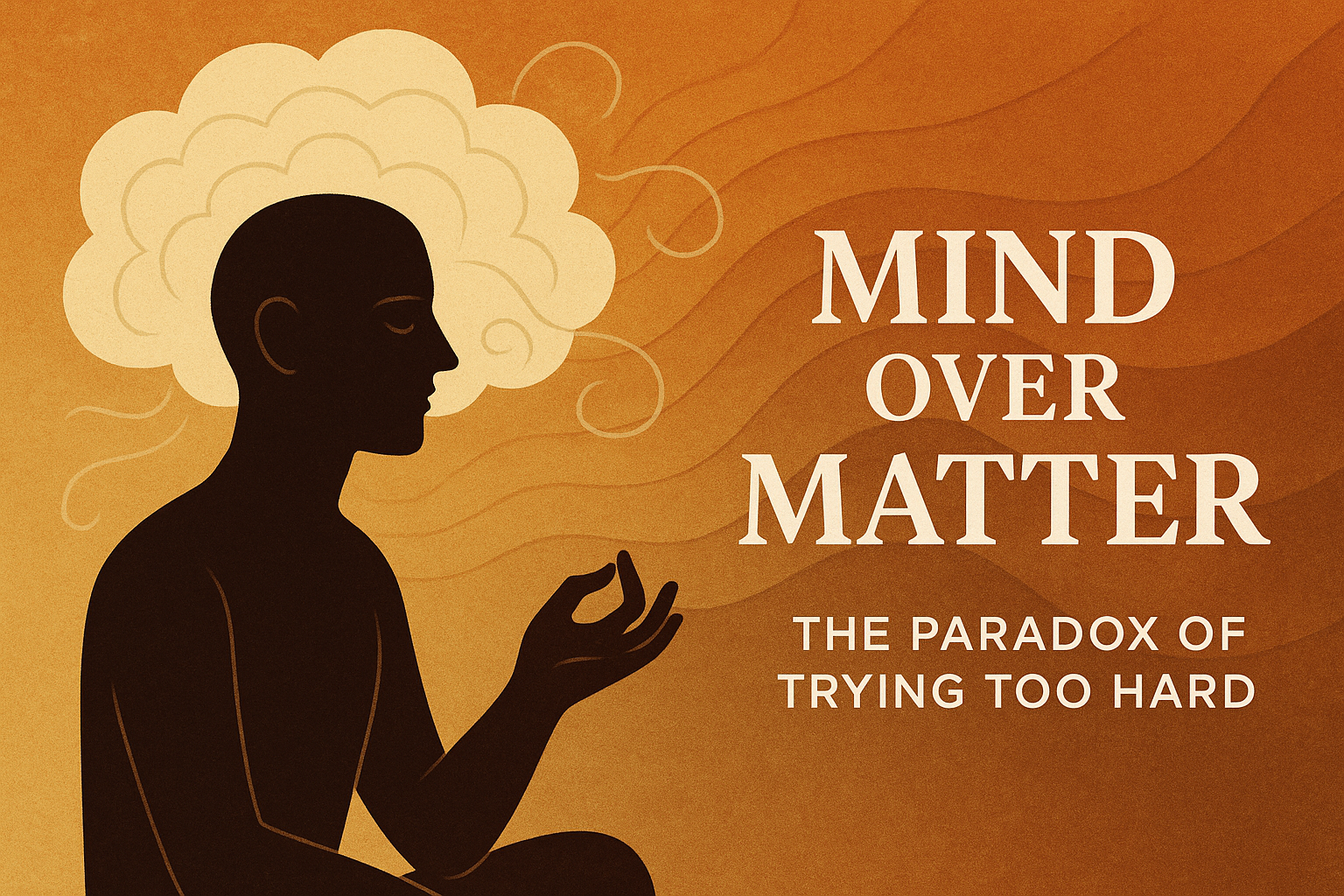
The Paradox of Trying Too Hard
By Nicholas Urbaniak • June 5, 2025
How Consistency and Courage Team Up to Drive Lasting Self‑Transformation
A lone figure steps toward a golden glow at the end of a stone passageway
By Nicholas Urbaniak • June 3, 2025
Struggle isn’t a detour—it’s a compass. This post shows how hardship clarifies priorities, reveals hidden support, and guides us toward deeper purpose, turning even the darkest passages into signposts for growth and authentic direction.
A focused young man sits at a wooden desk writing in a notebook beside an open laptop
By Nicholas Urbaniak • May 31, 2025
Overwhelmed by your to-do list? This post explores how simply starting—before you feel ready—can create momentum, ease anxiety, and unlock the natural productivity your mind craves. Discover how action leads to flow and why the first step is often the hardest… but also the most powerful.
A young woman with shoulder-length brown hair sits peacefully in a sunlit field at sunset
By Nicholas Urbaniak • May 30, 2025
Stop waiting for life to begin. This post explores how presence—not perfection—transforms each moment into the one that matters most.
A calm professional watches one plate spin while another shatters at his feet.
By Nicholas Urbaniak • May 29, 2025
Embrace failure, ditch perfection, and unlock a growth mindset. Learn how strategic surrender turns risks and mistakes into momentum for success.
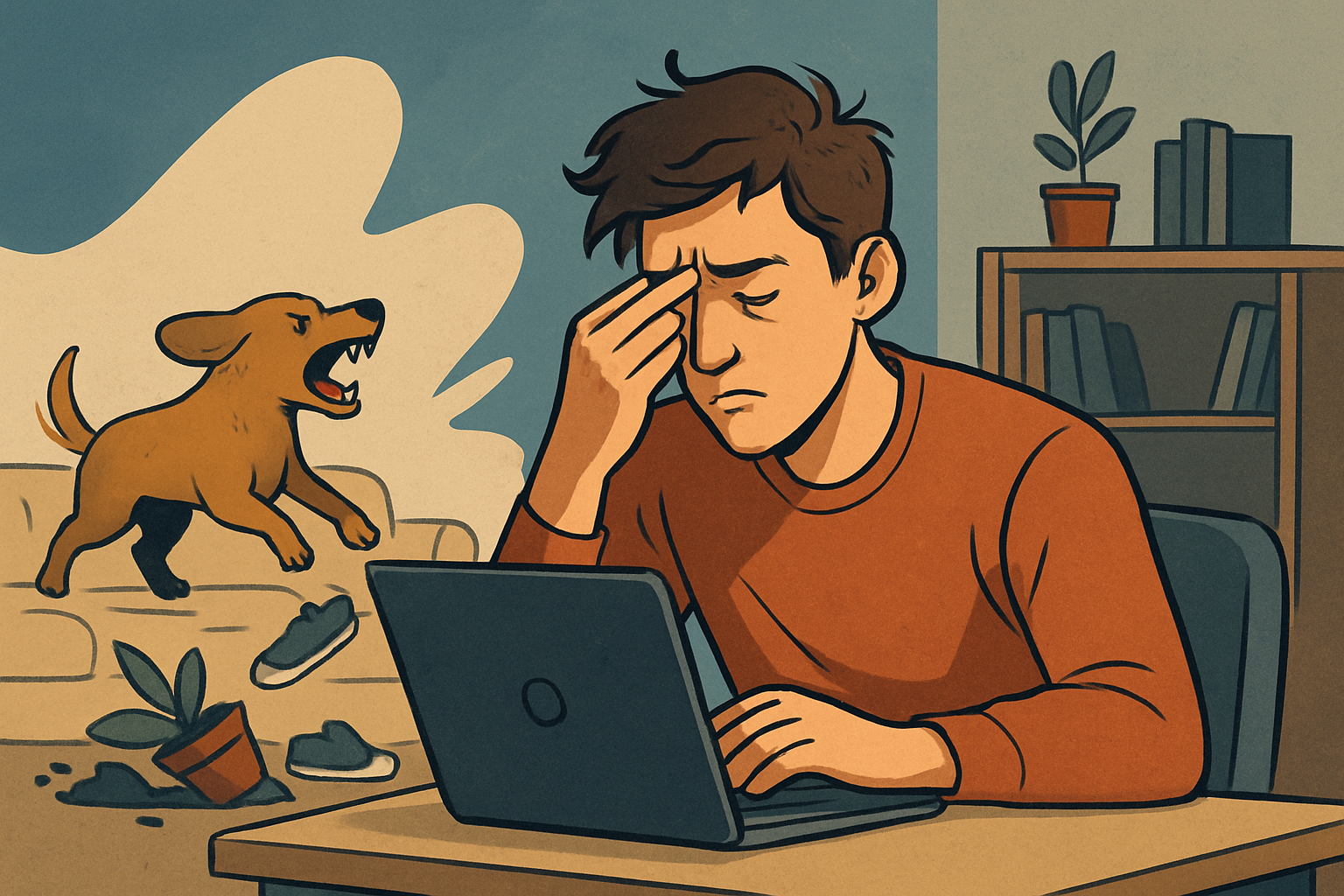
A man is sitting at a desk with a laptop and a dog behind him.
By Nicholas Urbaniak • May 7, 2025
How I learned that stepping away doesn’t mean giving up...again